A Remembrance Day Greeting Card Printable for Kids
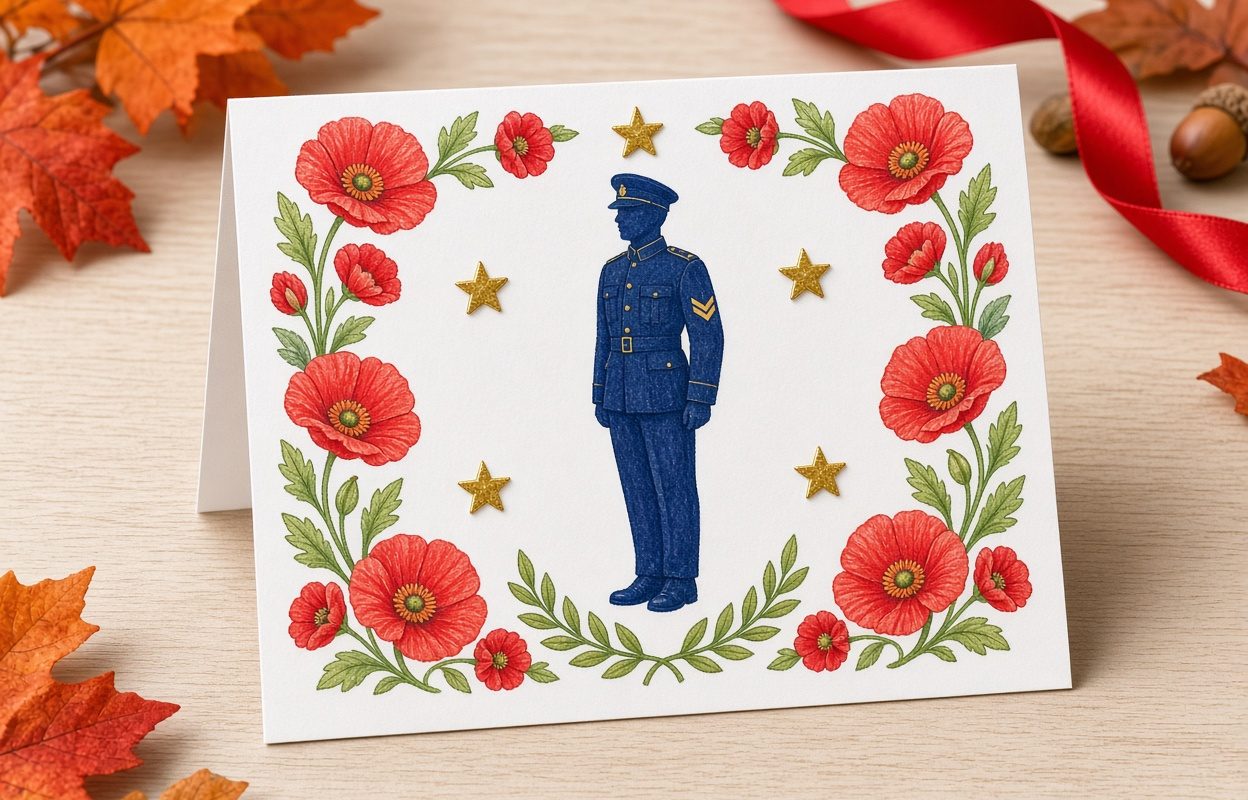
With Remembrance Day just two days away, this is the perfect moment to sit down with your little ones and create something meaningful together. This Remembrance Day greeting card printable for kids features a simple soldier silhouette surrounded by poppies — a gentle, age-appropriate way to introduce children to a day of gratitude and remembrance. Kids colour it in, cut it out, fold it up, and have a beautiful card ready to share with a grandparent, a neighbour, or simply to keep as a keepsake. It’s quiet, thoughtful, and wonderfully easy to do at home with supplies you already have.
- Best Age Range: 4 to 10 years old
- Time Required: 20 to 35 minutes
- Difficulty: Easy
- Mess Level: Low (just crayons or pencil crayons)
What You Need
- The free printable template (see below — print on regular white paper or light cardstock)
- Printer and white paper or cardstock (cardstock gives a sturdier card)
- Pencil crayons, crayons, or washable markers
- Child-safe scissors (adult supervision recommended for younger children)
- A bone folder or butter knife for a crisp fold (optional, adult use only)
- Glue stick (optional, for adding extra decorations)
- Metallic or gold sticker stars for decorating (optional — small parts, keep away from children under 3)
How to Make Your Remembrance Day Greeting Card
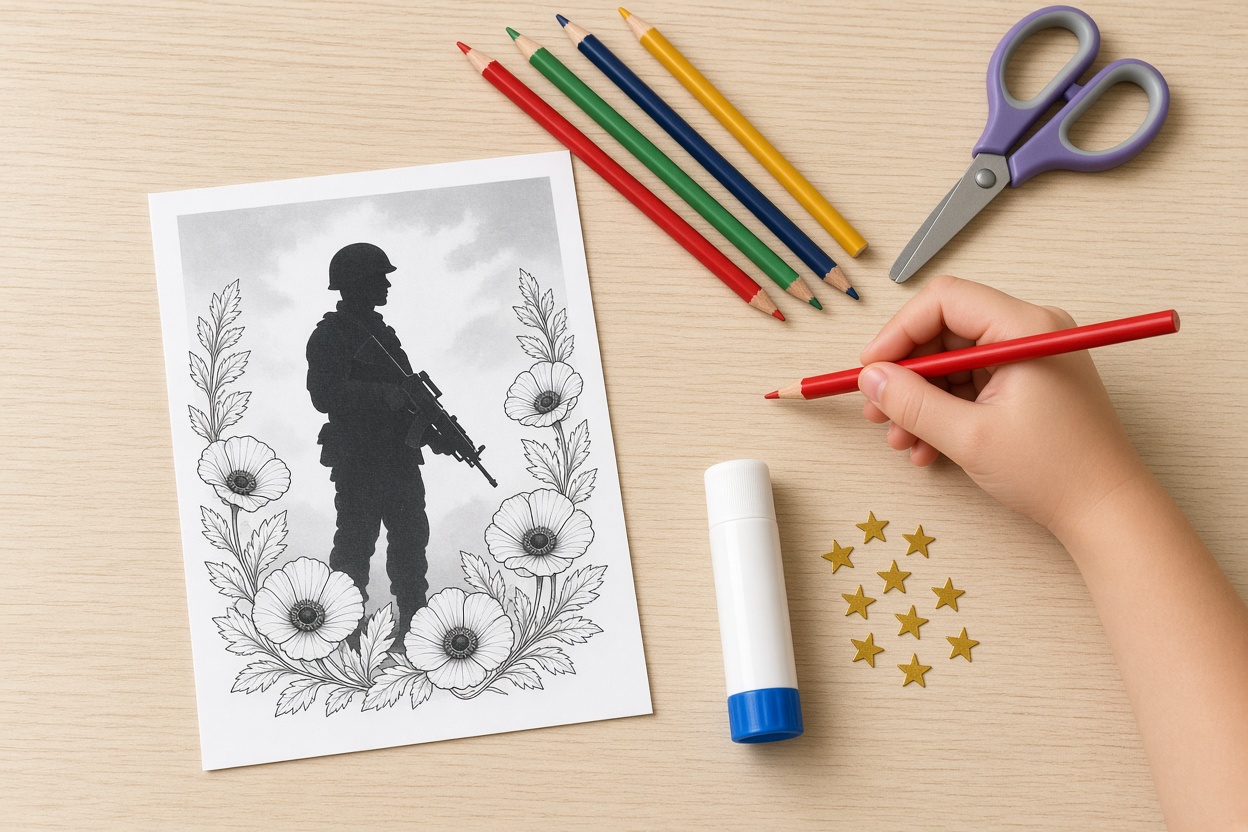
- Print the template. Print the black-and-white Remembrance Day greeting card template on a sheet of white paper or cardstock. If you can, use cardstock — it makes folding much easier and gives the finished card a lovely, sturdy feel.
- Look at the design together. Before colouring, take a moment to look at the card with your child. Point out the soldier silhouette standing tall, the poppy flowers along the border, and the laurel wreath detail. Talk briefly about why we wear poppies and what Remembrance Day means — keeping it simple and age-appropriate.
- Colour the front panel. Have your child colour the poppy flowers bright red, the leaves and laurel wreath deep green, and the soldier silhouette in a shade of their choosing — navy blue, grey, or brown all look lovely. Encourage them to press firmly with pencil crayons for rich colour.
- Colour the inside panel. The inside of the card has a simple wreath of poppies surrounding a blank oval — this is where a message will go later. Colour the wreath border carefully.
- Cut along the outline. Using child-safe scissors, carefully cut around the outside edge of the card template. Adult supervision is recommended here, especially for children under 6. The card is rectangular, so cutting is straightforward — just follow the outer line.
- Fold the card in half. With the coloured front facing outward, fold the card in half along the centre fold line. Press the fold down firmly. If you have a bone folder or the back of a butter knife (adults only), run it along the fold for a crisp edge.
- Write or draw a message inside. Help your child write a message inside the card — something simple like “We remember” or “Thank you” works beautifully. Younger children who aren’t writing yet can draw a small heart or a star instead.
- Add finishing touches. If you like, your child can press a gold or silver star sticker onto the front of the card, or glue a small square of red tissue paper over one of the poppies for a lovely 3D effect. Keep decorations simple so the design stays clear.
- Your card is ready to share! Tuck it in an envelope or leave it out as a Remembrance Day table decoration.
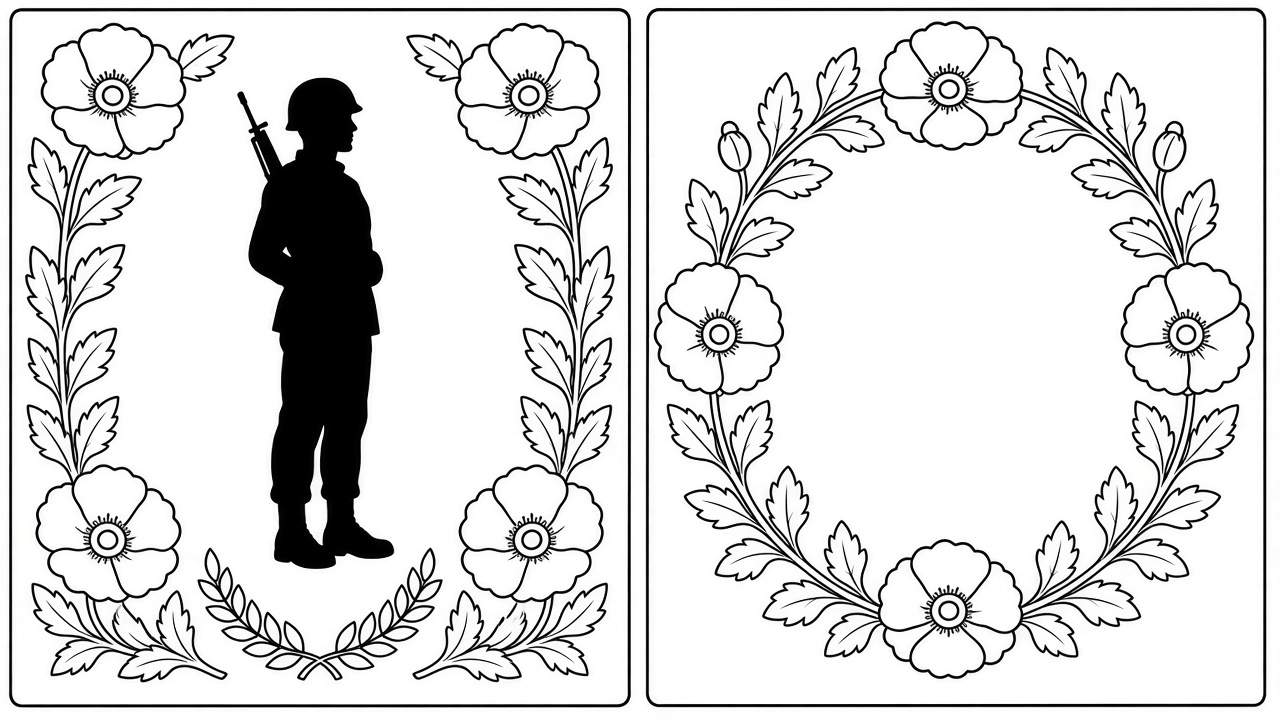
Download and print this page (free)
Tips for Little Ones (Ages 4 to 6)
- Use chunky crayons — they’re much easier for small hands to control over larger colouring areas.
- Let them choose their own colour combinations, even if the soldier ends up purple! The process matters far more than perfection.
- Do the cutting step together, guiding the scissors with your hand over theirs.
- Skip the message and have them draw a heart or a simple poppy flower inside instead.
Tips for Older Kids (Ages 7 to 10)
- Challenge them to blend two shades of red on each poppy — a darker red at the edges and brighter red in the centre — for a beautiful painted effect using pencil crayons.
- Encourage them to add fine details with a thin black marker: veins on the leaves, texture on the soldier’s uniform, or a subtle shadow effect.
- Older kids can write a short poem or a few meaningful sentences inside the card to practise their writing while expressing gratitude.
Fun Variations to Try
1. Mini Card Garland
Print several copies and have the kids colour each one differently. Punch a small hole in the top corner of each finished card and string them together on a piece of twine to create a beautiful Remembrance Day garland for the mantle or window.
2. Watercolour Wash Background
Before colouring in the details, have an older child (with adult help) lightly brush a watercolour wash of red and gold over the front panel and let it dry completely. Then colour the design on top with pencil crayons. The result looks stunning and very painterly.
3. Collaborative Classroom or Family Card
Print one copy for every family member or classmate. Each person colours their own card, then all the finished cards are assembled into a small booklet or bundle tied with a red ribbon — a collective act of remembrance that makes a wonderful gift for a grandparent or community member.
Why This Craft Is Great for Kids
Beyond its meaningful theme, this printable greeting card is quietly packed with developmental benefits. Fine motor skills get a solid workout through careful colouring within lines, handling scissors, and folding paper precisely. The act of choosing colours and deciding how to decorate the inside builds creative decision-making. Writing or drawing a message inside nurtures early literacy and self-expression. And perhaps most importantly, the gentle conversation that naturally happens while crafting — about why we remember, who we’re grateful for, and what bravery looks like — builds emotional intelligence and empathy in an age-appropriate, low-pressure way. Making something by hand to give to another person also teaches generosity and thoughtfulness, values that last long after the craft is done.
If your child loves crafting and expressing themselves creatively, we’d love to welcome them into one of our online art classes for kids at Bright Makers Studio. Our live, guided sessions help children build real art skills in a warm and encouraging environment — all from the comfort of home.
This Remembrance Day, slow down for 30 minutes, sit beside your child, and make something quiet and beautiful together. The poppy-covered card they colour today might just become a treasured memory in years to come. 🌺
Want to keep the creative momentum going? Explore our online art classes at Bright Makers Studio and find the perfect class for your young artist.
FAQs
What age is this Remembrance Day greeting card printable best for?
This craft works well for children ages 4 to 10. Younger children (ages 4 to 6) will love colouring and can do the simpler steps with a bit of grown-up help, while older kids (ages 7 to 10) can add more detail and write their own messages inside.
Can I print this on regular printer paper instead of cardstock?
Yes! Regular printer paper works perfectly fine. If you’d like a sturdier card that holds up better when folded and handled, light cardstock (around 65 lb or 90 gsm) is a great choice and usually works in a standard home printer.
How do I explain Remembrance Day to young children?
Keep it simple and focused on gratitude. You might say something like: “Remembrance Day is a special day when we say thank you to people who worked very hard to keep our country safe and peaceful.” Poppies are worn because they grew on the fields in Europe after the First World War and became a symbol of remembrance and hope.
Is this craft suitable for a classroom or group setting?
Absolutely — it’s ideal for classrooms, homeschool groups, or community events. Each child gets their own printed sheet to colour, and the low mess level (just crayons or pencil crayons) makes it very easy to manage in a group. No glue, paint, or water required for the basic version.