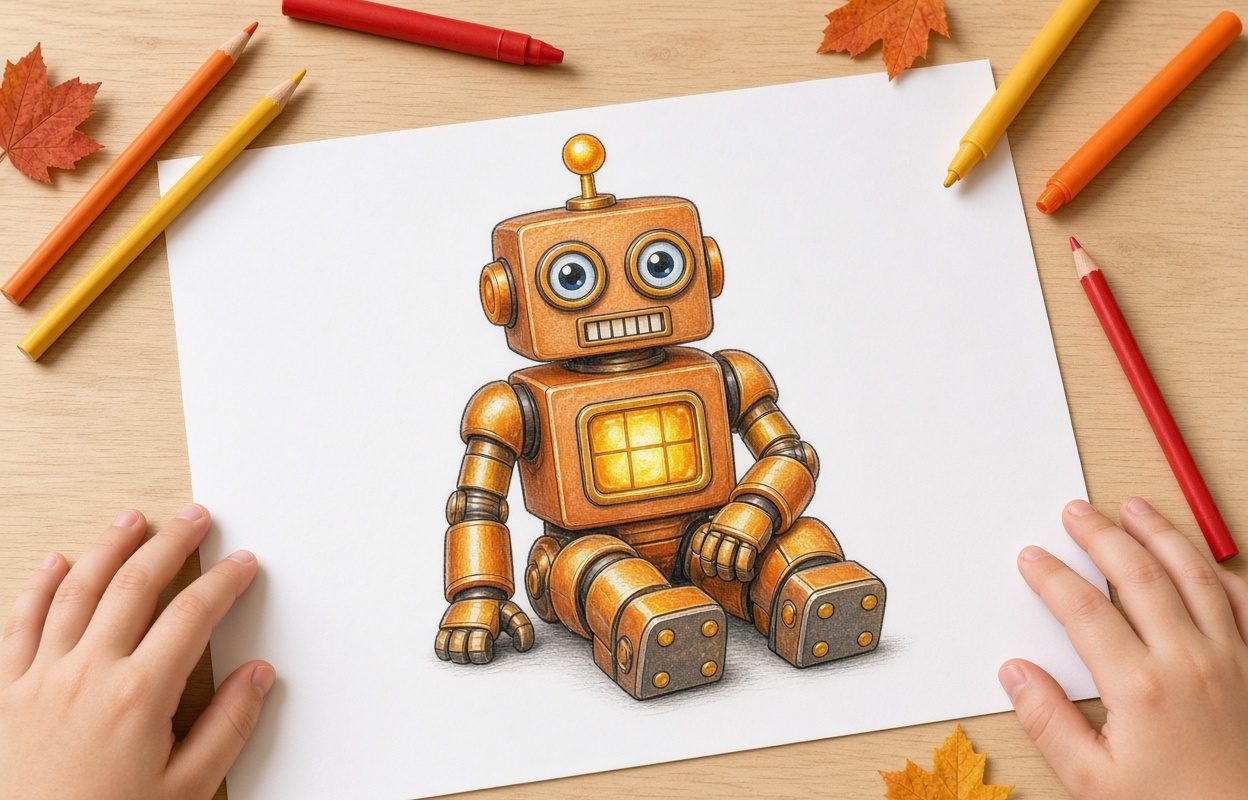
A Printable Robot Colouring Page for Kids Who Love to Colour and Create
Does your child go absolutely wild for robots? You are in the right place! This printable robot colouring page for kids features a cheerful, one-of-a-kind robot character packed with fun details to colour in — from blinky panel eyes and spinning antenna to chunky bolt boots and a little chest compartment window. It is the perfect screen-free activity for a quiet autumn afternoon when the leaves are blowing outside and you need something cosy and creative to do indoors.
Best of all, there is nothing complicated here. Print, grab some colouring supplies, and let your child’s imagination take over. Whether your little one stays neatly inside the lines or goes full rainbow explosion, this activity is a win every time.
Quick Craft Info
- Best Age Range: 4 to 10 years old
- Time: 15 to 45 minutes (depending on how detailed your child likes to colour)
- Difficulty: Easy — great for all skill levels
- Mess Level: Very low — markers or pencil crayons keep things tidy
What You Need
- The printable robot colouring page (see the black-and-white image below — right-click to save and print, or ask a grown-up to help you print it)
- A printer and standard white paper (or cardstock for a sturdier page)
- Colouring supplies of your choice: pencil crayons, washable markers, crayons, or watercolour paints
- Optional: metallic or glitter pencil crayons for a cool robot effect
- Optional: scissors for cutting out the finished robot (adult supervision required for scissors)
- Optional: a glue stick and construction paper if you’d like to mount the finished colouring page
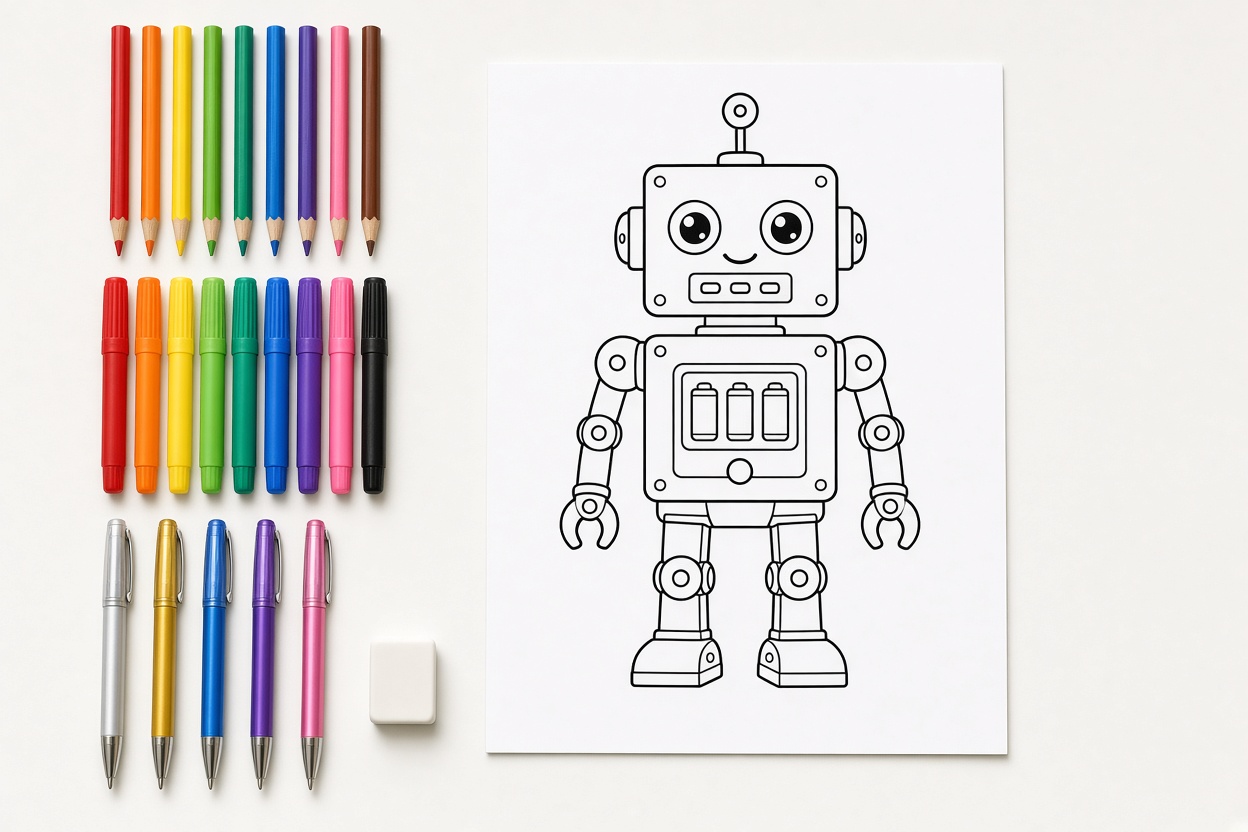
How to Use This Printable Robot Colouring Page
- Print the page. Right-click the black-and-white robot image on this page and save it, then print it on regular white paper. For a sturdier colouring surface, use cardstock. Make sure to print at full size (100%) so the robot fills the page nicely.
- Set up your colouring station. Lay the printed page on a flat surface. Gather your colouring supplies and set them within easy reach. Put a piece of scrap paper underneath if you are using markers, just in case of bleed-through.
- Decide on a colour scheme before you start. This is a great step for older kids especially! Ask your child: what colour will the robot’s body be? What about its eyes, its antenna, and its boots? Planning ahead often leads to really satisfying results — but it is totally fine to just dive in too!
- Start with the largest sections first. Colour the robot’s main body block before moving on to smaller details. This helps avoid accidentally smudging smaller areas you’ve already finished.
- Add the small details last. The tiny bolts, the chest window, the antenna tip, and the face panel details are all fun to do at the end. Use a fine-tipped marker or a sharp pencil crayon for these bits.
- Let it dry fully if you used markers or paint. Give the page a minute or two before touching it to avoid smears.
- Optional — cut out your robot! With an adult’s help, carefully cut around the outline of the robot. Adult supervision is required when using scissors. Your cut-out robot can be glued onto coloured paper, used as a bookmark, or even taped to the fridge as artwork.
- Show it off! Every robot deserves to be displayed. Hang it on the wall, slip it into a photo frame, or send a photo to a grandparent. Your child’s robot is one of a kind!
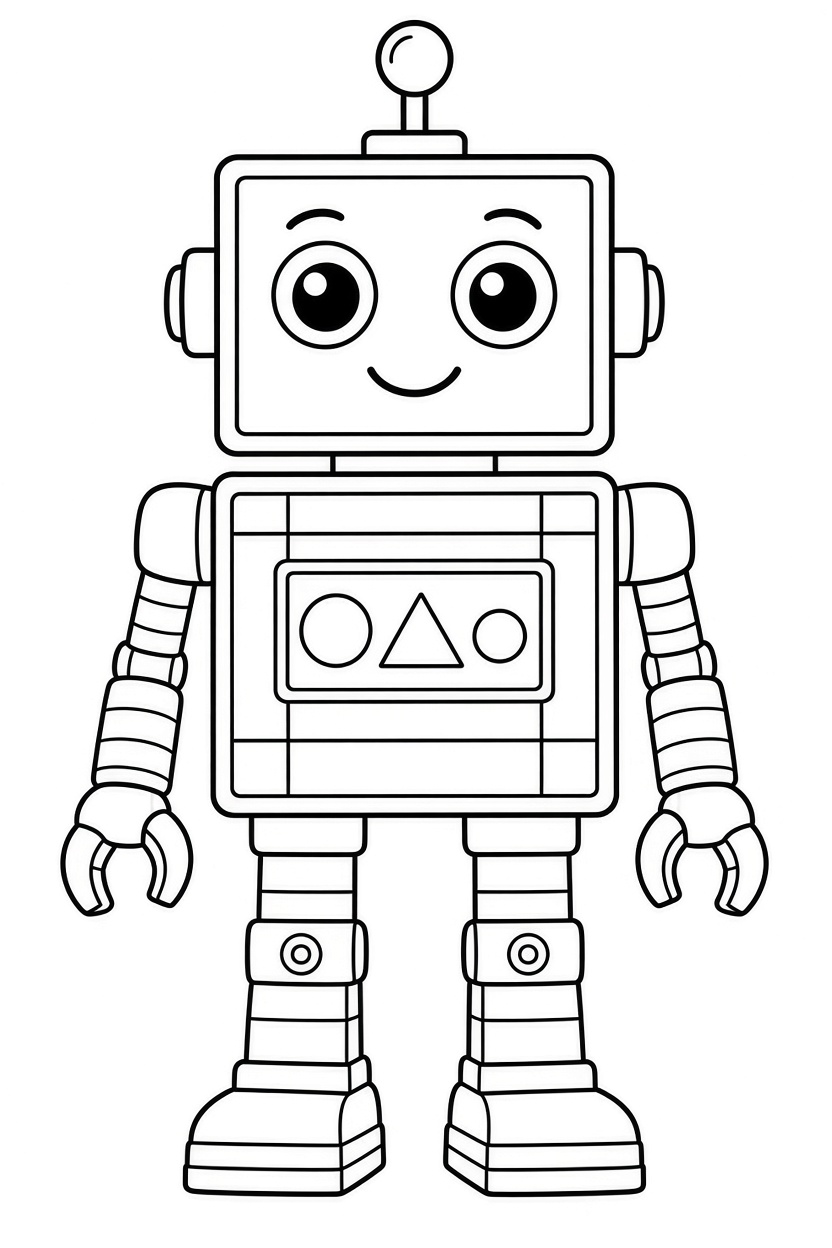
Download and print this page (free)
Tips for Little Ones (Ages 4–6)
- Thick crayons or large washable markers are easiest for small hands to grip and control.
- Encourage your child to colour in one section at a time and celebrate each part as they finish it — the arm, the leg, the head. Breaking it into small wins keeps things fun.
- It is totally okay if they colour outside the lines! Colouring is about enjoying the process, not perfecting the product.
- Try naming the robot together while you colour. What is its robot name? What does it like to eat? A little storytelling makes the activity even richer.
Tips for Older Kids (Ages 7–10)
- Challenge them to create a colour palette using only three or four colours for a graphic, cohesive look.
- Metallic pencil crayons or silver and gold gel pens look absolutely amazing on robot artwork — highly recommended!
- Encourage shading: colour one side of each section slightly darker to give the robot a 3D, metallic appearance.
- After colouring, they can use a thin black marker to trace over the outlines and make the final image really crisp and bold.
Fun Variations to Try
1. Autumn Robot
Give your robot a seasonal spin! Colour its body in warm autumn tones — deep oranges, rusty reds, and golden yellows. Add little leaf stickers around the finished page, or draw falling leaves in the background to place your robot right in a fall scene.
2. Robot Family
Print multiple copies of the colouring page and have your child colour each one differently — a big robot, a medium robot, and a little baby robot. Cut them out and arrange them into a robot family portrait on a sheet of dark construction paper.
3. Mixed Media Robot
After colouring, let your child glue small craft materials onto the robot for a 3D effect. Tiny squares of aluminium foil make great metallic panels. Stickers, foam shapes, or small sequins can decorate the chest compartment and antenna. Note: small parts like sequins are not suitable for children under 3 years old. Adult supervision is recommended when using craft glue or hot glue.
Why This Craft Is Great for Kids
Colouring might look simple from the outside, but it is quietly doing a lot of wonderful things for developing minds and bodies:
- Fine motor skills: Gripping a crayon, controlling pressure, and staying within (or intentionally outside!) lines all build the hand strength and coordination kids need for writing.
- Focus and patience: Sitting with a colouring page and working toward a finished product is great practice for sustained attention — a skill that benefits kids in school and beyond.
- Creativity and decision-making: Every colour choice is a small creative decision. Over a whole page, that adds up to a lot of confident, independent thinking.
- Stress relief: The repetitive, rhythmic motion of colouring is genuinely calming for kids (and grown-ups). It is a wonderful wind-down activity after a busy school day.
- Pride and self-expression: No two children will colour this robot the same way. The finished page is entirely their own creation, and that feeling of ownership is priceless.
If your child loves creative activities like this one, they might also enjoy exploring Bright Makers Studio’s online art classes for kids, where they can build real drawing and painting skills in a fun, encouraging environment — all from home.
Keep the Creativity Going
We hope your little robot fan has an absolute blast with this printable! Colouring is one of those beautiful, timeless activities that never gets old — and watching a child bring a black-and-white page to life with their own colour choices is always something special. If your child is hungry for more guided creative experiences, we warmly invite you to explore live online art classes at Bright Makers Studio, designed just for kids ages 4 and up. We would love to see your budding artist there!
FAQs
What age is this printable robot colouring page for?
This colouring page is designed for kids roughly ages 4 to 10. Younger children will enjoy the large, bold shapes, while older kids can focus on detail, shading, and colour planning.
What is the best way to print the colouring page?
Print on standard white paper at 100% scale for the best results. If you want a sturdier page that holds up to heavy marker or watercolour use, print on cardstock instead. Black ink is all you need for a crisp colouring page.
Can I use watercolour paints on this printable?
Yes! Watercolours work beautifully on this page, especially if you print on cardstock, which is thicker and holds up to moisture much better than regular printer paper. Let each section dry before moving on to the next to avoid colours bleeding into each other.
How can I make the robot colouring page more challenging for older kids?
Encourage older kids to add shading, use a limited colour palette, or trace the finished outlines with a fine black marker for a polished, graphic novel look. They can also add a detailed background scene around the robot to make it a full illustration.